
Start » State-of-the-Art

Fluid power—encompassing hydraulics, pneumatics, and sealing technology—includes a wide variety of products that can be combined into any number of systems tailored to specific applications. At the same time, however, this diversity and flexibility also entail a vast amount of data and information. Fluid Power 4.0 enables structured data capture, comprehensive documentation, and consistently up-to-date product data.
Innovative digital solutions enable the development of new products and services in both supplier and end-user industries.
Data defines the value creation of tomorrow. Both manufacturers and end users rely on information throughout the entire product life cycle. However, finding this information is often difficult. The results of this are unclear or missing details, incorrect assumptions, significant time expenditure, and stressful phone calls between suppliers, end users, and, last but not least, frustrated customers.


In 2016, the industry agreed a standard for the fluid power digital twin, which it has been developing ever since. The key technology and central element of Fluid Power 4.0 is the Asset Administration Shell (AAS), which uses standardized properties and structures and provides uniform, unambiguous access across organizations. The AAS contains all data and information over the entire life cycle. It is standardized across manufacturers, structured, and compatible with formats such as “AutomationML” or “OPC UA.” This enables it to be linked to and embedded in the digitalization concepts of end-user industries.
Once the industry had established the Asset Administration Shell (AAS) as the digital twin standard, the Digitalization Working Group within the Fluid Power Association of the VDMA laid the groundwork through “Fluid Power 4.0.” This included initial demonstrators with QR codes that allowed digital twins to be explored directly at trade shows—including Live-AAS, which displayed real-time status and service life data from OPC UA systems. At the same time, standardization efforts were advanced within ECLASS and ISO to provide manufacturers and end users with standardized property models and interoperable data structures. This groundwork forms the foundation upon which the Fluid 4.0 project is systematically building today.
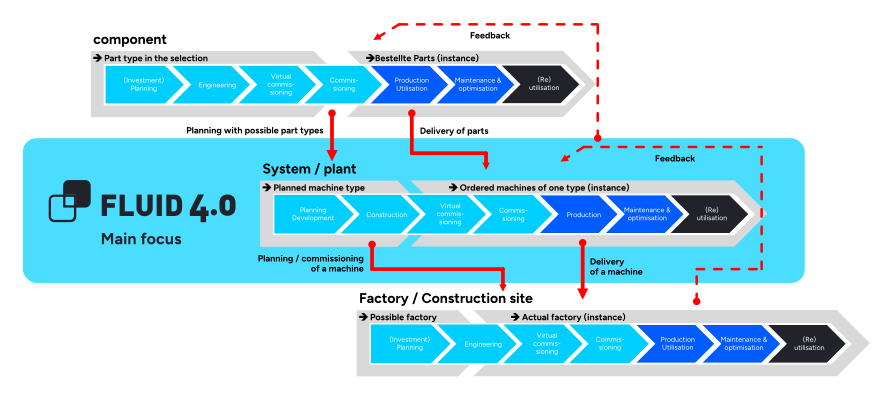
A key step toward operationalizing digitalization was the analysis of some 20 use cases across the entire product life cycle (PLC)—from the perspectives of manufacturers, machines, and end users. Through several rounds of evaluation and selection, the seven most relevant use cases were prioritized and subsequently refined in greater detail. To deepen understanding, several moderated workshops were held in 2021, during which the use cases were refined and consolidated in terms of content. These workshops identified pain points and the expectations of various stakeholders, developed four core use cases, and defined their specific benefits for industry, machine manufacturers, and end users.