Start » State-of-the-Art » Commissioning Use Case
Today, the commissioning of complex fluid power systems is often hampered by missing, inconsistent, or hard-to-access product and process information for components from different manufacturers. Without a unified data foundation, application engineers, OEMs, and customers lose time due to lengthy coordination processes.
Traditional documentation spanning different formats and media hinders planning, identification, and the retrieval of operating instructions or spare parts information, thereby delaying commissioning. Digitalization using standardized data models can address these challenges by making all relevant information available throughout the entire process.
In the commissioning use case, the Asset Administration Shell uniquely maps physical products to their digital data. The standardized description based on the AAS and its submodels ensures vendor independence and consistent information structures. Relevant documentation is available digitally and at any time. This saves time, reduces errors, and simplifies handling during planning and commissioning.
Want to take advantage of these benefits for your machines or systems? Talk to us about specific use cases, discuss technical details, and explore some possible next steps. Feel free to contact us with no obligation. We’ll show you how the Asset Administration Shell can make your initial commissioning more efficient.
The “digital nameplate” is a user-friendly way to communicate essential product information to customers. By scanning the integrated QR code, users can easily access the digital twin and all relevant information (such as manufacturer, product name and type, serial number, or order code), as well as the certificates for the fluid power product. In addition, the digital nameplate can be updated at any time, ensuring that all changes or software updates—for example, those carried out during maintenance work—are always reflected.
Thanks to the “Handover Documentation” submodel, you always have the latest data sheets, documentation, operating instructions, and spare parts lists for your fluid power product at your fingertips—digitally and all in the correct language. This not only boosts profitability but also saves valuable resources.
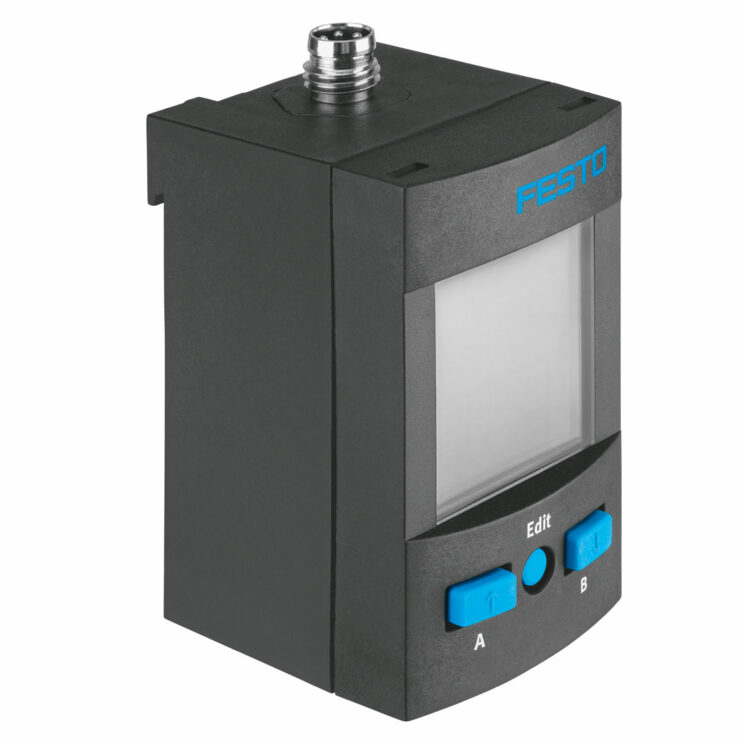
Using selected fluid power products as examples, we demonstrate how commissioning information is stored in a structured manner within submodels of the Asset Administration Shell. The examples are intentionally generalized so that the concepts shown can be applied to different products, systems, and workflows.