Fluid 4.0 is laying the foundation for digitized fluid power through digital twins, standardization, and submodels.
Fluid 4.0 builds on the work of “Fluid Power 4.0”—an initiative of the VDMA Fluid Power Association and its member companies that established the technical foundations for interoperable and standardized digital twins in fluid power.
Digitalization Concept
Why Fluid Power Needs New Digital Concepts
The digitalization associated with Industry 4.0 and the cross-vendor exchange of data and information are driving a fundamental transformation across the entire value chain.
In this context, it is not only the multitude of hydraulic and pneumatic components and their application-specific combination possibilities, but also their versatile range of applications that pose particular challenges for fluid power as a supplier industry. For example, in fluid power, only a few standardized application scenarios or units with predefined inputs and outputs can be created.
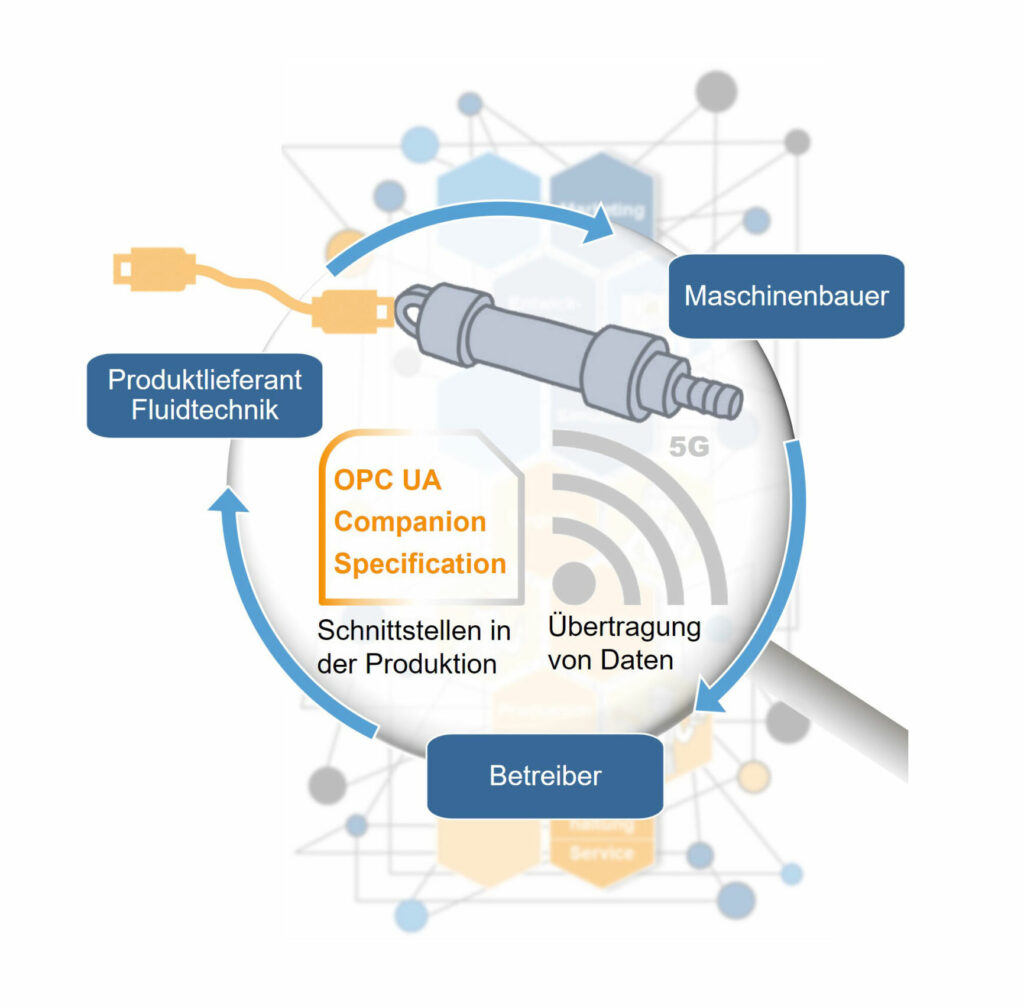
To ensure that this diversity is also reflected in digitalization, the VDMA Fluid Power Association and its member companies have agreed a digitalization concept that offers maximum flexibility and compatibility with other formats such as OPC UA or AutomationML:
the Asset Administration Shell (AAS) as an industrial digital twin.
Asset Administration Shell
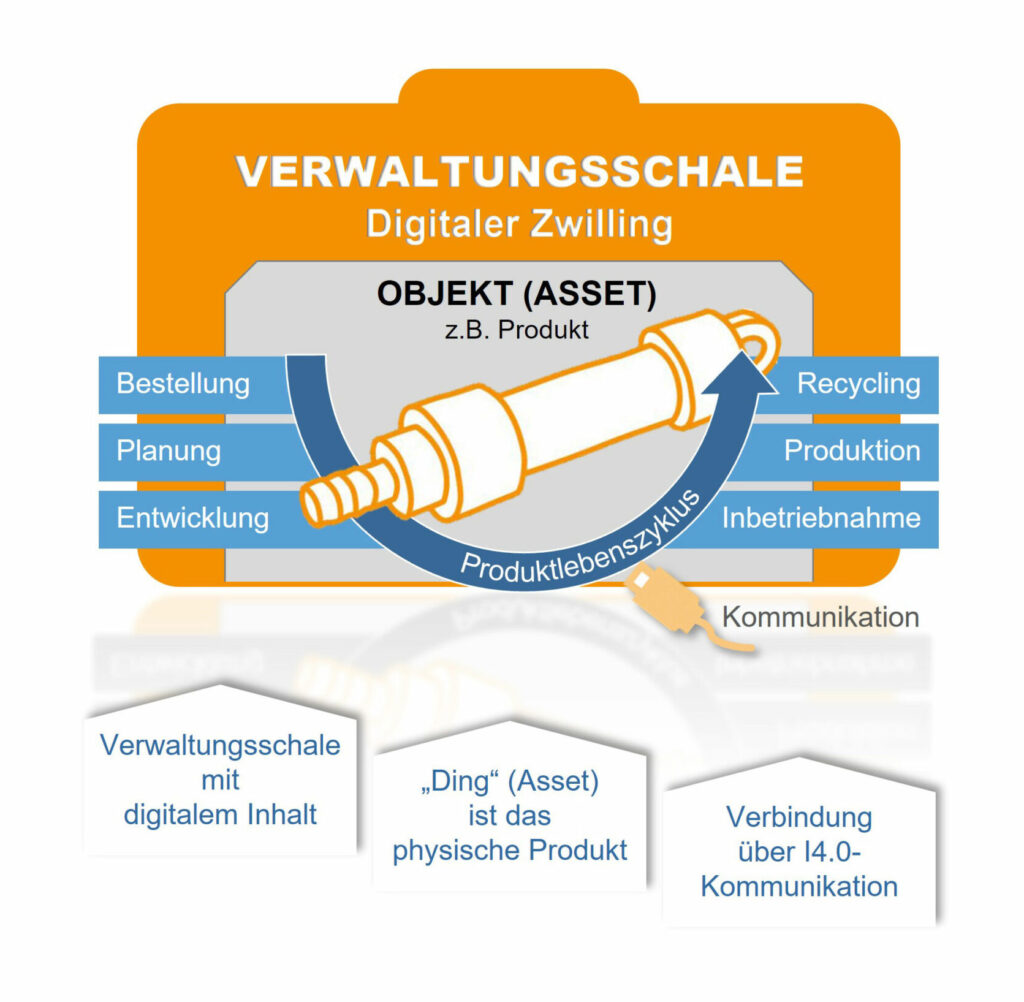
The Asset Administration Shell: The Digital Twin of Fluid Power
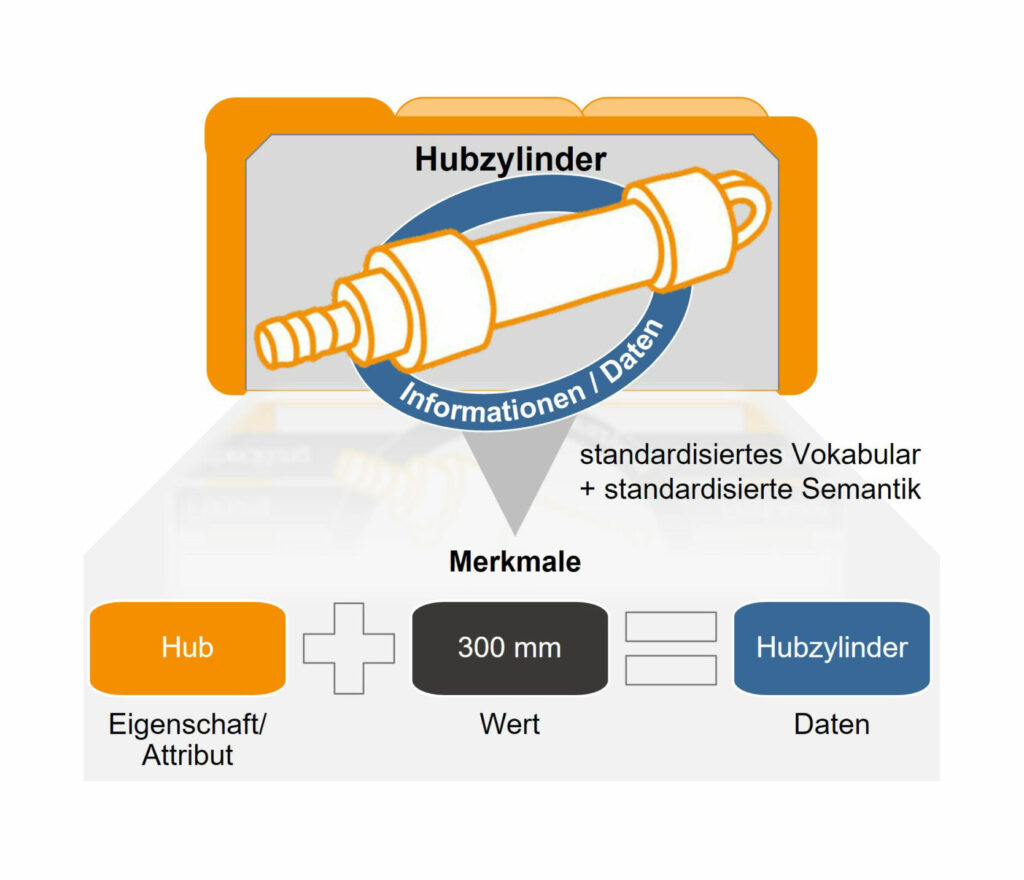
The Asset Administration Shell (AAS) is a format standardized by the IEC that enables the machine-readable, unambiguous capture and structuring of product properties. It provides a digital representation of all data and information related to the product.
Only by assigning an Asset Administration Shell to a physical object (an “asset”) can it be connected to the digital world and Industry 4.0 communication. The range of possible assets is extremely diverse: from components, fluids, seals, and subsystems, to entire plants and machines.
As a central element, the Asset Administration Shell (AAS) describes and accompanies the fluid power asset throughout its entire life cycle. The term “digital twin” refers to the digital data and information model of a product. In fluid power, the digital twin is realized within the Asset Administration Shell.
Secure Communication Throughout the Entire Life Cycle
The Asset Administration Shell provides controlled access to all of an asset’s information and functions, thereby serving as a secure communication interface for Industry 4.0.
In line with the concept of networked production and operations, Asset Administration Shells should be available at all times and are therefore primarily stored in the cloud or at the edge. Data generated continuously throughout an asset’s life cycle—such as during component installation, internal testing, handover to customers, or during operation—can thus be quickly and easily updated or overwritten as needed.
Even passive assets without an internal communication interface can be identified and accessed via identifiers attached to or inside the device that link to the Asset Administration Shell in the cloud (e.g., 2D Data Matrix code, QR code, or RFID tag). This ensures that every asset has a uniquely identifiable Asset Administration Shell that always contains its current digital representation.
Standardization
Standardization as the Key to Interoperability
Standardized Data Through Standardized Properties
A key prerequisite for data communication and machine readability is uniform semantics as well as a standardized vocabulary that is defined in cross-vendor and cross-industry standards. Properties also require unique IRDIs (International Registration Data Identifiers), which are used in the Asset Administration Shell for the unambiguous labeling and identification of data. Fluid power properties are standardized by ISO and in ECLASS, a German multilingual consortium standard.
The VDMA Fluid Power Association, together with its Executive Board Working Group on Digitalization and its Digitalization Working Group, acts as initiator, organizer, and coordinator of these activities with the goal of achieving standardized interoperability. Since 2016, up to 40 experts have been working in three ECLASS working groups on the standardization of fluid power properties. The digital ECLASS standard is expanded every year. Furthermore, with a view to ensuring global standardization and usability, the medium-term goal for Fluid Power 4.0 is to achieve synchronization with the ISO 18582 series of standards, “Fluid power – Specification of reference dictionary”.
Submodels: A Framework for Complex Data Environments
Different sets of properties are required for specific application scenarios and use cases. These are grouped into meaningful, logically delineated submodels within the Asset Administration Shell (e.g., the Digital Nameplate), so that both machines and users can quickly access the data. This modular architecture makes the AAS scalable and enables flexible adaptation to different life-cycle phases and use cases.
Submodels are based on the structure of ECLASS blocks and aspects and allow fluid power companies to implement digital twins that are both standardized and application-specific. The development of the submodels is coordinated by the Industrial Digital Twin Association (IDTA). To ensure interoperability, all submodels must comply with the Industry 4.0 meta model (currently Version 3), which defines the structural rules for their construction. The further development of these semantics is a key step toward fully realizing the potential of digital fluid power.